Density Altitude Impact & Aircraft Performance
In aviation, knowing the exact density altitude is an absolute requirement for aviation safety. Density altitude is pressure altitude corrected for nonstandard temperature. This specific metric dictates exactly how your airplane performs based on the current local air density. A high density altitude significantly reduces engine power output, limits propeller efficiency, and degrades total wing lift. This combination directly affects aircraft performance.
Key Takeaways
- Density altitude is pressure altitude corrected for nonstandard temperature variations.
- As air density decreases, aircraft lift and thrust drop significantly.
- Hot days, high physical elevations, and high humidity drastically increase density altitude.
- Verify your performance limits when operating in high, hot, and heavy conditions.
Table of Contents
Takeoff Distance and Climb Performance at the Airport
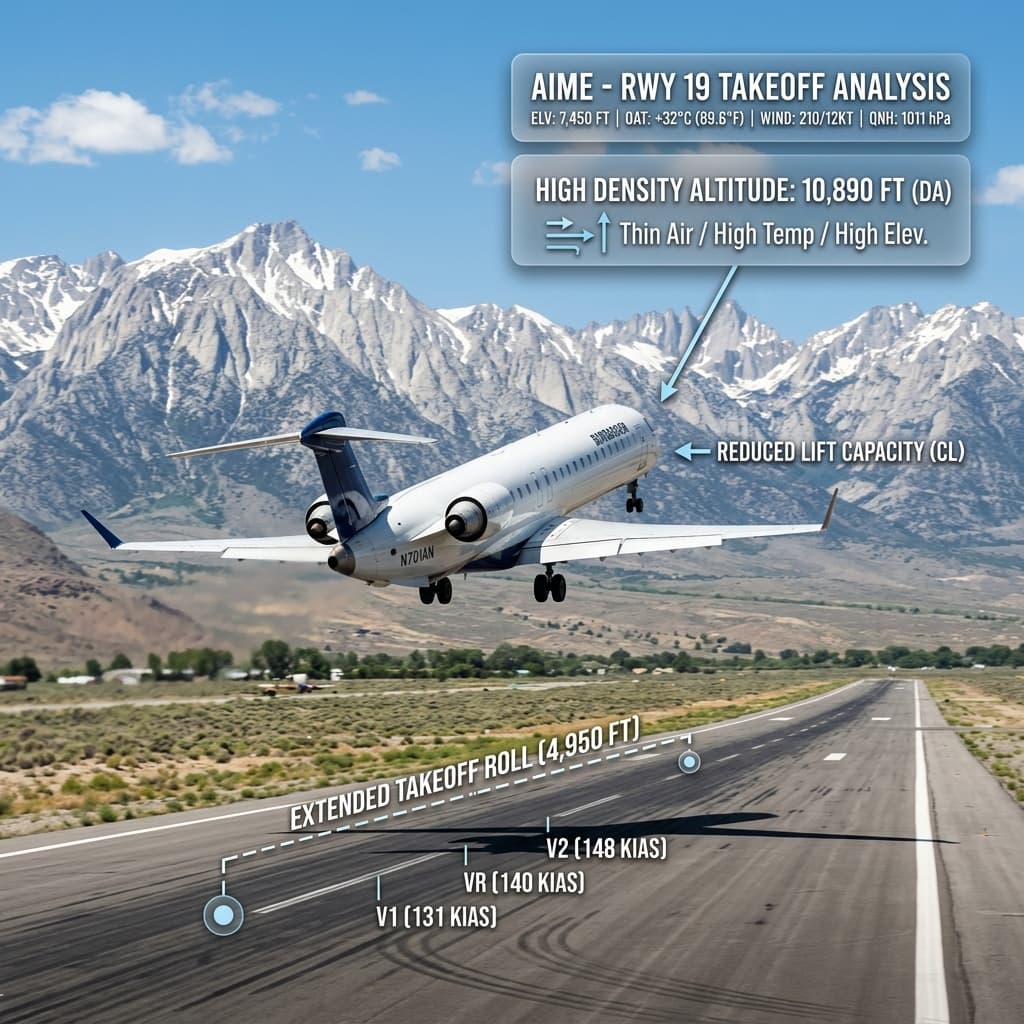
On a hot, humid summer day at a physical high-elevation airport, your airplane operates structurally and aerodynamically as if it were at a much higher altitude. This natural phenomenon results in a much longer required takeoff distance and a distinctly sluggish climb performance. For example, departing a 5,000-foot field elevation airport at a high temperature could easily yield a density altitude exceeding 8,000 feet. The aircraft behaves exactly as if flying through air found at 8,000 feet.
Combustion and Engine Mechanics
Engine power output will linearly decrease with fewer air molecules available for internal combustion. A normally aspirated piston engine mixes air and fuel. When the air is less dense, the engine breathes in a lower mass of oxygen per intake stroke. Without turbocharging to compress the incoming air, the engine cannot produce its rated sea-level horsepower.
Propeller Efficiency Loss
The propeller also loses aerodynamic efficiency as the air becomes less dense. A propeller works exactly like a rotating wing, generating forward thrust by taking bites of air. Thin air provides less resistance and less mass for the blades to push against. When you combine high physical elevation, high temperature, and high moisture, your overall takeoff ground roll increases dramatically, creating a dual loss of engine thrust and propeller bite. A classic pilot error involves assuming that a long runway solves all high-altitude problems. While extra pavement keeps you on the ground longer to build speed, it does not improve the airplane's physical ability to gain altitude once airborne. If terrain or obstacles lie at the end of the departure path, poor climb performance quickly creates an unrecoverable emergency. Pilots must use a thorough calculator to easily calculate density altitude and check exactly how these factors change their necessary takeoff and landing numbers.
Water Vapor, High Humidity, and Outside Air Temperature
While raw temperature and local pressure altitude act as major primary factors, a pilot must carefully account for atmospheric moisture. Warm air naturally holds far more water vapor than cold air. Water vapor molecules are physically lighter than standard dry air molecules, meaning high humidity creates air that is fundamentally less dense. High local humidity will further increase density altitude, sometimes adding hundreds of feet to your calculated values on a damp day.
Finding the Exact Baseline Values
To find your exact flight numbers, you start with pressure altitude. Pressure altitude is the altitude mathematically indicated when your altimeter is set to the standard 29.92 inches of mercury (1013.25 mb). You then adjust this baseline for the registered outside air temperature (OAT) compared to standard temperature model figures.
The ISA Standard Model
The International Standard Atmosphere (ISA) states that standard temperature is 15°C at sea level, dropping roughly 2°C per 1,000 feet gained in altitude. As the local temperature rises above this nonstandard baseline, your final density altitude increases. A humid day adds a minor but distinct penalty on top of the raw heat calculation. You must accurately determine the OAT from ATIS or AWOS reports to formulate a safe flight plan. For simple calculations, pilots apply a mental shortcut. The standing rule dictates that for every 1°C the outside air temperature rises above the standard ISA profile, the local density altitude escalates by roughly 120 feet. This arithmetic highlights why a scorching hot afternoon flight proves fundamentally different from a brisk morning departure at the exact same geographic location.
Calculate Density Altitude for Safe Runway Crosswinds
When you fly in a high density altitude environment, the thinner air strictly means your physical control surfaces possess less aerodynamic authority. This scenario makes it tangibly more difficult to manage a strong lateral crosswind on your steady approach to the designated runway. Your ailerons and rudder simply lack the thick air mass to deflect against, reducing the rolling and yawing moments they generate.
Handling Sluggish Aerodynamics
A crosswind component that feels completely manageable at sea level abruptly shifts into a massive physical struggle at higher elevations. Pilots must explicitly anticipate a sluggish flight control response and a noticeably higher true airspeed, translating into significantly faster ground speeds on touchdown. A faster ground speed requires heavier braking action and a longer runway roll to bring the airplane to a full stop.
Always check a crosswind calculator to verify you stay strictly within safe defined margins for your current altitude condition and your individual airplane limits.
Altitude, Pressure Altitude, and Aviation Safety
The dangerous combination of high field elevation, high summer temperatures, a heavily humid day, and a fully loaded heavy aircraft drastically increases risk to total aviation safety. As air density decreases, physical wing lift and engine thrust both drop in tandem. Before departing any high altitude or mountain airport, verify the required takeoff distance inside your specific flight manual.
Ground Effect Dangers
If the computed density altitude climbs too extreme, the aircraft will fail to successfully climb out of ground effect. Ground effect provides a false sense of security by reducing induced drag close to the runway surface. Once the pilot tries to climb away, the airplane sinks back down. This specific trap acts as a leading cause of tragic accidents at high-elevation mountain airports. Always trust the calculated numbers, respect the atmospheric conditions, and firmly recognize that density altitude is pressure altitude corrected for nonstandard temperature.
Frequently Asked Questions
What is density altitude?
Density altitude is pressure altitude corrected for nonstandard temperature. It represents the altitude the airplane feels like it is flying at, regardless of the actual geographic elevation.
How do you calculate density altitude?
You calculate density altitude by finding the pressure altitude at your airport, then adjusting for the outside air temperature deviation from the standard atmosphere model.
How does high humidity affect aircraft performance?
High humidity makes the air less dense as water vapor is lighter than dry air. This reduction in air density increases the calculated density altitude and reduces your aircraft performance.
Does density altitude affect my true airspeed?
Yes. At a high density altitude, your indicated airspeed will read the same on a steady approach, but your actual physical true airspeed through the air mass will be faster. This leads to a faster ground speed upon landing, demanding a longer landing roll.