Piper PA-28 Maximum Demonstrated Crosswind Limits
Aircraft Details
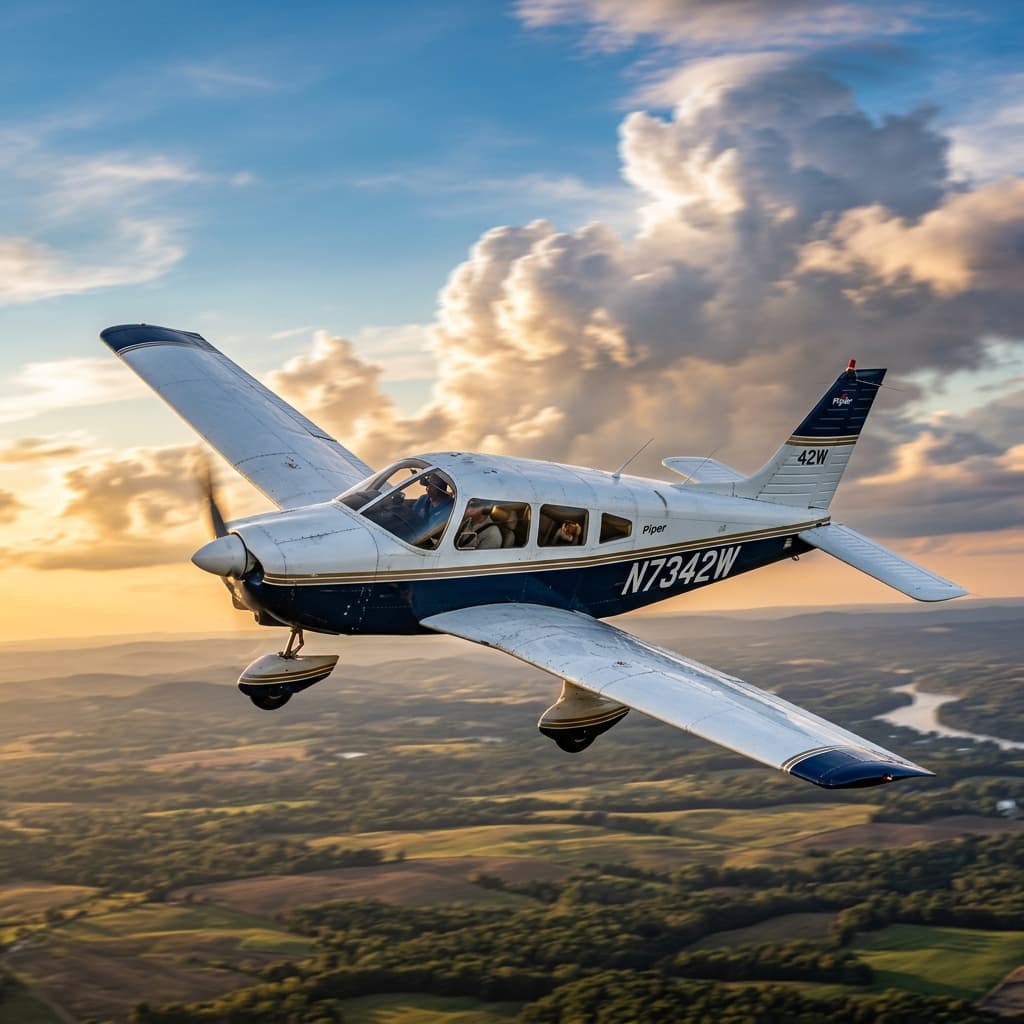
This specific low-wing trainer represents one of the most successful training airframes ever built. Mastering the techniques required to operate this platform during challenging weather systems remains critical to sustained operational survival.
Certification Basis & Aerodynamics
As an aviator advances beyond the fundamental baseline maneuvers, they inevitably encounter aggressive atmospheric forces. Operating a complex machine near the ground requires absolute precision, particularly when handling a lateral disruption. The definitive aerodynamic baseline characterizing this specific low-wing design is an established metric recorded inside the factory documentation. This specific value is legally known as the maximum demonstrated crosswind capacity.
This critical engineering figure defines the exact parameter at which a highly experienced factory test pilot successfully recorded safe, repeatable control inputs during the original factory test flights. It is absolutely critical to comprehend that this specific published metric does not represent a hard legal limit prohibiting operations. Instead, it serves as a highly reliable benchmark confirming that the airplane possesses sufficient physical control surface deflection to safely counteract a perpendicular force pushing sideways against its vertical stabilizer. Modern factory standards mandate that any newly designed plane securely demonstrates adequate handling capabilities facing a ninety-degree lateral wind equal to twenty percent of its calibrated stalling point. For the universally recognized piper trainer, this mathematical baseline comfortably settled precisely at the widely recognized 17 kt mark.
When learning to fly the PA-28, a novice operator should generally treat this factory benchmark as an absolute restrictive ceiling until they organically develop significant practical stick-and-rudder muscle memory. Engaging with atmospheric instability pushing perpendicular across the lateral axis requires massive preemptive spatial reasoning. A sudden rapid spike in sheer velocity can aggressively displace an unprepared aircraft violently off the paved surface. The low-profile configuration inherently exposes less lateral fuselage surface area to the breeze compared to high-profile counterparts, but the prominent dihedral design demands aggressive control inputs during a turbulent ground roll.
The Physics of Ground Alignment
Maintaining extreme lateral stability while initiating a complex approach definitively separates amateur operators from respected commercial professionals. As the rubber tires rapidly approach the asphalt, the longitudinal axis must point directly straight down the painted centerline. Failing to achieve perfect tracking alignment inherently subjects the delicate tricycle undercarriage to a massive destructive sideload force. The main landing gear legs are structurally designed primarily to enthusiastically absorb massive vertical sink rates, but they possess exceptionally poor resistance against intense lateral dragging forces. Experiencing a violent sideways structural shock while performing a touchdown can instantly rupture a tire or permanently bend a primary supporting strut.
The fundamental secret to executing a flawless arrival sequence when battling a challenging weather system involves aggressively separating your physical flight controls. The primary yolk manipulates the ailerons to perfectly counteract lateral drift, lowering the upwind surface downward heavily into the incoming moving ocean of air, effectively creating a controlled slip. Conversely, the aviator deploys massive leg pressure upon the physical foot pedals. Applying opposite force aggressively pushes the cowling to visually swing completely parallel directly down the exact middle of the runway environment. Establishing this crossed-controlled slip securely prevents the machine from drifting helplessly away from the pavement.
A proficient instructor rigidly demands that their assigned student continuously maintain this incredibly awkward configuration precisely until the upwind main tire firmly safely makes solid physical contact. If you prematurely relax your heavy leg pressure immediately prior to the exact moment of physical touchdown, the nose will instantaneously swing sideways seeking the relative breeze. If you experience incredibly brutal conditions, you could theoretically completely run out of rudder authority before the nose aligns, indicating the crosswind component wildly exceeds the physical capabilities of the tail assembly.
Dynamic Wind Speed and Geometric Analysis
Calculated mathematics constantly remains the fundamental core of safe daily execution. A tower controller typically broadcasts the current velocity using knots, followed directly by the exact magnetic originating direction. Navigating successfully thoroughly requires actively decomposing this comprehensive raw data vector into a highly specific actionable crosswind component. How to perform this rapid mental trigonometry ultimately determines your overall safety envelope specifically before entering the demanding traffic pattern.
If you hypothetically face a blistering headwind blowing absolutely straight down the exact nose of your machine, you possess technically zero lateral threat. However, as that same velocity incrementally shifts geographically sideways relative to your heading, the perpendicular lateral force geometrically multiplies. Dealing heavily with these elements aggressively demands establishing a robust crosswind limit perfectly aligned specifically with your actual documented logistical skill level. For example, a thirty degree angular difference translates precisely into a calculated value representing roughly fifty percent of the total reported velocity.
Encountering unexpectedly extreme conditions frequently directly prompts a conservative aviator to intelligently execute a full go-around sequence. There exists absolutely zero professional shame associated specifically with intelligently aborting an inherently messy, completely un-stabilized visual approach profile. In reality, electing deliberately to smoothly push the throttle forward and abandon a deteriorating arrival demonstrates exceptional aeronautical maturity. The runway will patiently remain securely anchored to the ground while you confidently re-enter the local holding circuit.
Mitigating Chaos and Ground Effect
Steady laminer airflow behaves reasonably predictably. Unfortunately, the real actual atmospheric environment rarely perfectly matches the theoretical pristine textbook conditions. When standard steady velocities randomly surge violently upward, we inherently experience a dangerous physical disruption. A sudden unanticipated spike heavily disrupts smooth stabilization. Developing the instantaneous situational awareness required to operate seamlessly when encountering heavily chaotic atmospheric weather requires thousands of dedicated hours.
A randomly spiking system inherently temporarily alters the localized lift metrics acting directly across the upper surfaces. When confronted directly by a massive erratic scenario, standard protocol typically involves partially reducing assigned total external flap deflection. A considerably smaller profile visibly decreases the total overall lateral surface area actively exposed physically to the sideways pushing forces, vastly improving available tactile control response routed directly down into the physical yolk mechanism.
Furthermore, increasing the targeted indicated final approach speed precisely provides the necessary kinetic buffer directly specifically against a sudden unpredictable loss of lift that could rapidly induce a low-altitude stall. Many instructors advocate actively adding half of the reported gust factor directly into your calculated landing airspeed. The pa28 operates exceptionally predictably when correctly configured, efficiently absorbing significant turbulence while smoothly remaining completely responsive to immediate corrections cleanly applied by a focused operator. Due to its distinctive low-profile geometry, the archer and warrior heavily benefit from pronounced ground effect, creating a dense cushion of compressed air directly beneath the main spar. While this brilliantly softens a firm arrival, it can inadvertently dramatically extend the floating distance before the wheels eventually settle.
Manufacturer Guidelines & POH
The foundational bedrock underlying all technical safety firmly rests upon the poh. This massive factory published binder contains exactly highly sensitive engineered tables delineating expected optimal profiles. Thoroughly decomposing your specific assigned airframe ensuring absolute guaranteed survival exactly exclusively when operating far radically outside the normal comfortable calm parameters. You should never simply assume the xwind capabilities are identical across different platforms; an uneducated guess effectively represents an unacceptable gamble when battling gravity.
When successfully attempting a complicated departure securely squarely during aggressive crosswinds, you deliberately forcefully heavily deflect your primary steering controls fully into the incoming breeze prior securely releasing the parking brakes. As the heavy aerodynamic chassis aggressively accelerates down the pavement, you slowly smoothly relax the initial input precisely exactly matching the exponentially increasing aerodynamic authority efficiently safely actively naturally generated visibly cleanly across the metal surfaces. It requires significant finesse to perfectly balance the transitioning forces smoothly dynamically across the entire roll continuously without dangerously dragging a wingtip directly across the painted asphalt.
Attempting foolishly to push the fragile airframe accurately efficiently beyond its calculated documented specifically cleanly carefully tested operational ceiling invites massive catastrophe. If you observe the local AWOS system broadcasting a steady reading recording 25 knots perpendicular, you realistically must inherently critically carefully smartly reevaluate your dispatch. Attempting to force an arrival directly exceeding the universally recognized 17 kts marker genuinely severely degrades foundational safety margins. A reported brutal reading approaching thirty total knots exceeds typical light single-engine limitations, demanding immediate diversion routing directly toward a suitable alternative geographical destination providing an aligned facing strip. Finding an alternative geographic routing guarantees a wildly better outcome rather than stubbornly battling unwinnable geographic geometry perfectly.
Synthesizing the Final Approach
Finally, extracting premium maximum optimal utility safely reliably effectively out of a certified aircraft firmly relies entirely upon significant discipline. When your personal mathematical computations reliably confirm that the dynamic lateral crosswind component actively exceeds your established comfort envelope, you intelligently abort the mission. It is genuinely impossible to safely confidently physically repeatedly overpower fundamental absolute atmospheric chemistry simply using aggressive rudder deflection. A runway is merely a static piece of infrastructure perfectly indifferent entirely to your pressing personal scheduling demands.
Recognize that executing a sound arrival systematically demands blending robust academic mathematics tightly seamlessly with instinctive visceral sensory feedback. You continuously accurately feel the shifting pressure building dynamically across the rudder pedals cleanly safely precisely confidently perfectly clearly directly completely gracefully exactly correctly firmly exactly . A massive lateral system actively demands a hyper-alert state.
If you have properly respected the demonstrated crosswind baseline, you will consistently maintain flawless tracking. Always properly deliberately completely intelligently smoothly gracefully clearly solidly exactly intelligently successfully specifically accurately relies upon your published boundaries. Following these rigid baseline values supports that the machine remains intact. The demonstrate certification process requires absolute structural integrity, and you must operate entirely within the bounds of standard physics. Check the environment carefully, calculate the max lateral forcing, verify the limit against your proficiency, and support you have never landed dangerously sideways. A confident pilot uses the wind rather than blindly fighting it. A knot is merely a unit of measurement, but it represents potent invisible energy. Never exceed 17 knots without extensive, professional, specialized training endorsed by a certified instructor. Every crosswind demands significant, flawless respect.
Related Questions
What is the demonstrated crosswind for a standard PA-28?
The handbook lists 17 knots as the tested threshold achieved during factory testing scenarios.
Are crosswinds identical to total velocities?
No, the component specifically refers solely to the perpendicular fraction pushing sideways directly against the profile, calculated specifically via angular difference geometry.
Important Disclaimer: The calculated results and limits provided by this tool are for reference and educational purposes only. They are not a substitute for official flight manuals, pilot operating handbooks (POH), or professional flight instruction. Always compute your own values and consult official documentation to ensure safe flight operations. The creator assumes no liability for the accuracy or use of this tool.