Cessna 182 Skylane Maximum Crosswind Limits
Aircraft Details
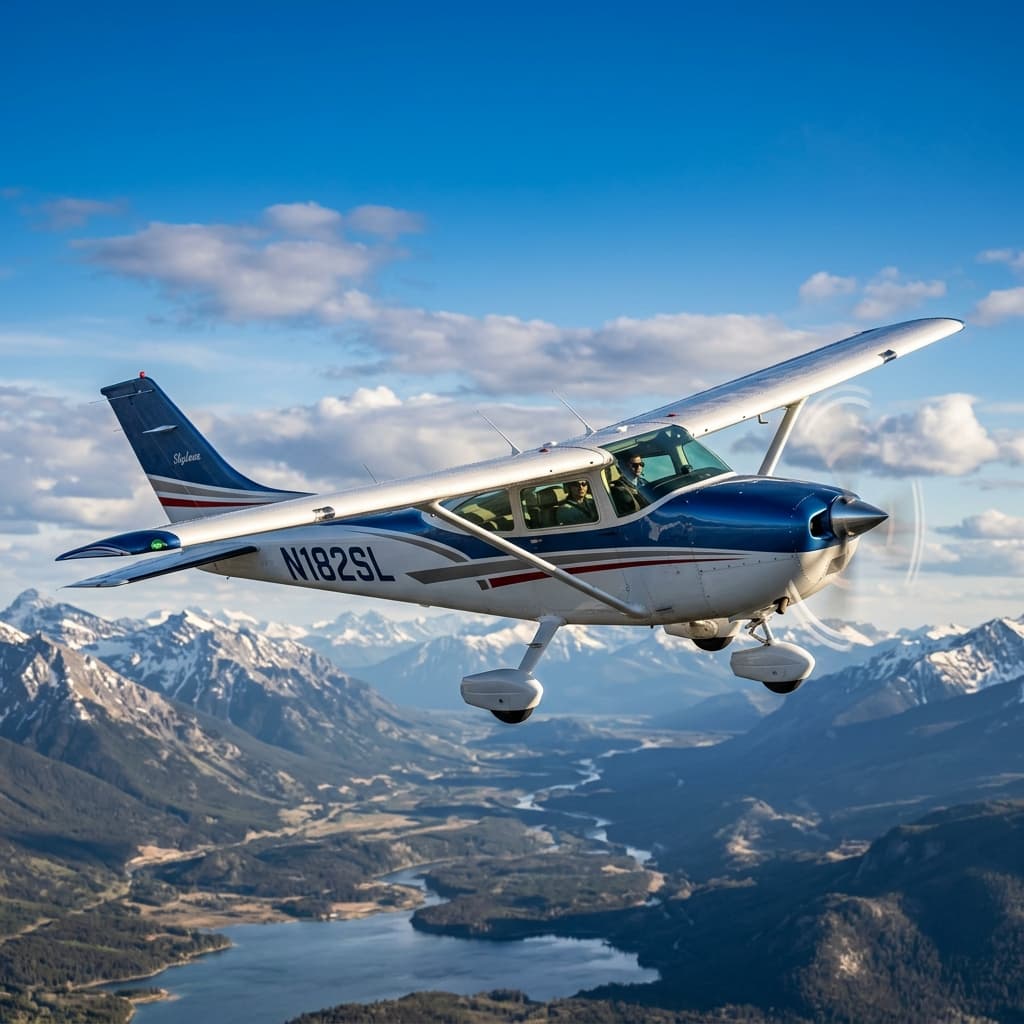
The Skylane is a legendary cross-country machine, but mastering its behavior in a lateral breeze is essential for every aviator. Understanding the peak crosswind component ensures safety in challenging conditions.
Understanding the Proven Lateral Baseline
When you fly this high-performance machine, the first thing you check in the poh for landing performance is the proven baseline value. This knot value is typically set at fifteen for this airframe. It is important to realize that this is a proven lateral component, meaning a factory test aviator successfully landed the airplane in these conditions during flight testing.
This fifteen-unit value is not necessarily a hard regulatory limit, but rather a demonstrated capability. However, most aviators should treat it as a personal limit. Operating beyond this fifteen-unit mark requires exceptional proficiency and tail control. If the atmospheric state at the airbase is erratic or if you face a direct crosswind of 25 knots, you must evaluate if the plane can handle the lateral force.
This machine is a heavy, stable platform compared to smaller trainers, which helps in lateral flows. But that extra weight also means more momentum if things go wrong on the runway surface. When the air currents start to push the structure off the center path, the operator must use a combination of roll control and rudder pressure to stay straight.
The Physics of a Lateral Arrival
A flawless arrival in this platform involves two primary techniques: the crab and the slip. Most operators will use an angled approach method during the final stage to keep the vehicle tracking the center of the asphalt. Just before settling, the operator must align the front with the paved surface using the tail and lower the upwind wing.
This transition requires sufficient tail authority to overcome the natural tendency of the vehicle to point into the breeze. In a steady lateral flow, the tail surface acts like a sail, wanting to swing the front into the air current. If you hit the stop on your foot controls, you cannot keep the vehicle aligned. At this point, a go around is mandatory.
Managing velocity is also critical. An excessive approach speed can lead to a long float in the final phase, giving more time for the air to blow you off course. Conversely, being too slow increases the risk of a stall if a surge hits. Following the factory recommended velocity is vital.
Dealing with Erratic Conditions
When the air is surge-heavy or gusting, you must add a gust factor to your target velocity. A common cfi or instructor recommendation is to add half of the variance to your target. For example, if the air is ten units steady but surging to twenty, the increment is ten units, so you might add five to your approach.
This extra velocity provides a buffer against a sudden drop in air movement that could cause the vehicle to drop. However, be careful not to carry too much momentum into the ground phase or taxi operation. Once landed, you must continue to control the vehicle until it is parked. This means keeping corrections held in as you move to the ramp.
In cases where the max lateral component exceeds your proficiency or the peak capability of the platform, don't hesitate to divert to a different airport with a better alignment. A go around is always a better option than a forced arrival that ends poorly.
Baseline vs. Regulatory Requirements
It's a common misconception that the proven baseline is a regulatory mandate. For non-commercial operations, it is technically an advisory. However, from a safety perspective, it is a very strong guidance. If you have an incident while exceeding the proven threshold, you may find yourself in a difficult position.
The manufacturer chooses to demonstrate a specific value during testing to show the vehicle is safe for a typical operator. In the case of the Skylane, the fifteen-unit max is a very reasonable guidance. While an expert might be able to handle higher values, the risk increases significantly.
Always assume that the air reported by the source might be different at the ground. Obstructions like hangars or trees can create turbulence and shifting flows that make the crosswind landing even more difficult.
Maximizing Lateral Capabilities
To handle a lateral force effectively, you must understand the physics of the vehicle and maintain rudder authority. This platform has a high-wing design, which means the balance point is lower than the lift surfaces, providing some natural stability. But the high surface also means a larger area for the breeze to catch.
Using lift devices appropriately is another skill. In very strong flows or crosswinds, some operators prefer to use less than full deployment to reduce the area and keep the vehicle more controllable. This will result in a higher velocity on contact, but it can provide better control.
Continuous practice with an instructor is the best way to improve your proficiency. Every mission is an opportunity to refine your technique. Whether you are dealing with a light breeze or a steady lateral flow, the fundamentals remain the same: stabilize and stay straight all the way to the end.
Operational Scenarios and Decision Points
Imagine you are approaching a narrow runway with a reported 20 knots perpendicular breeze. This exceeds the proven baseline for this machine. A wise pilot will immediately consider the risks. The vehicle is robust, but the laws of physics are unforgiving. If you attempt the landing, you must have the proficiency to align perfectly.
If the air is blowing hard from the side, the crosswind landing becomes a test of patience. You must wait for the right moment to flare. If you find yourself drifting, don't push it. A stable retreat preserves the machine and your pride. This is a fantastic tool, but only when operated within its limits.
Furthermore, consider the airport environment. Some fields have hills or trees that create mechanical turbulence. This can turn a steady breeze into a series of unpredictable surges. In these cases, maintaining a slightly higher approach speed is a safety necessity.
Final Thoughts on Lateral Components
Mastering the lateral arrival is a hallmark of a proficient operator. By respecting the proven baseline and understanding the factory guidelines, you can ensure that every mission is a safe one.
Remember that the paved surface is a dynamic environment. Lateral forces can change in an instant. Always have a plan for a stable retreat and never be afraid to use it. This is a robust vehicle, but it still requires a focused operator to navigate the challenges.
Whether you are flying into a large facility or a small strip, the intensity you can safely handle is a combination of the vehicle's capability and your own proficiency. Stay within your boundaries, monitor the environment, and always strive for that flawless arrival.
In conclusion, the fifteen-unit proven threshold is a reliable guide. While the vehicle can demonstrate great stability, the operator must remain vigilant. From start to finish, every unit of air counts. Keep your controls active, your surfaces positioned correctly, and your velocity on target. Safe flying!
Related Questions
Is there a different limit for different models of this series?
While most models share the 15-knot demonstrated value, always verify the specific poh for your serial number as subtle differences in engine or modifications can affect handling.
What happens if the wind is 15 knots perpendicular?
If the wind is 15 knots direct, you are at the demonstrated limit. This requires high focus and proper crosswind technique to land safely without side-loading the gear.
Important Disclaimer: The calculated results and limits provided by this tool are for reference and educational purposes only. They are not a substitute for official flight manuals, pilot operating handbooks (POH), or professional flight instruction. Always compute your own values and consult official documentation to ensure safe flight operations. The creator assumes no liability for the accuracy or use of this tool.