Airbus A320 Maximum Crosswind Limits & Landing Guide
Aircraft Details
The airbus a320 is the backbone of modern commercial transport. Understanding its lateral boundaries is essential for every operator transitioning to the type.
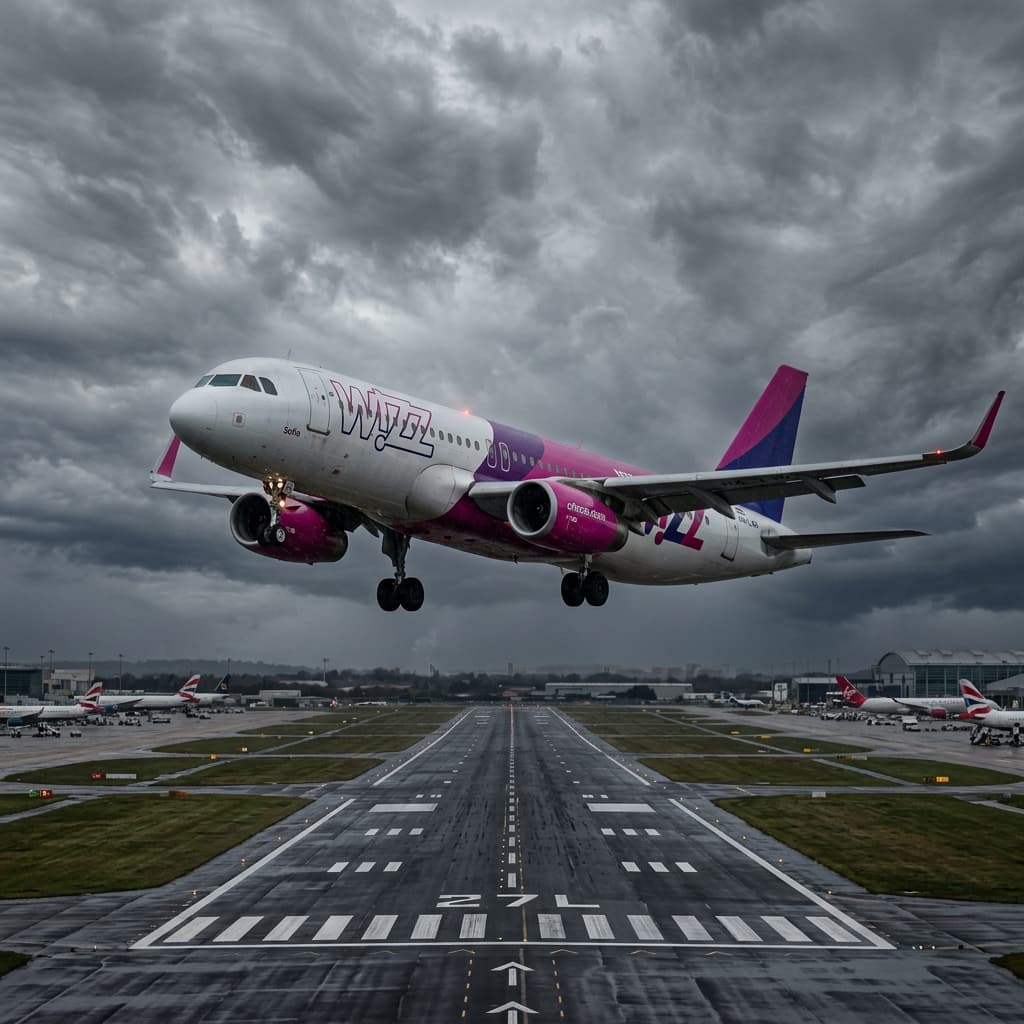
Understanding the Lateral Limitations
The a320 family is certified for a maximum crosswind component of 33 kts for landing in dry conditions. When conditions are gusting, this value can be extended to 38 knots including the surge increment. These figures are published in the Crew Operating Manual and represent a hard limitation — unlike general aviation platforms where the value is merely a demonstrated threshold.
It is critical for every pilot to understand that these numbers are not advisory. In commercial operations, exceeding a published limitation is a reportable event. The 33-knot threshold was established through extensive certification testing across thousands of approaches in varying atmospheric conditions. Every type-rated crew member encounters this value during initial training in the simulator.
For takeoff, the limitation differs. The peak lateral value for departure is typically 29 kts on a dry runway, though this varies by surface condition and flap configuration. A wet or contaminated surface significantly reduces these values, requiring careful assessment before every dispatch. The crew must consult the performance tables specific to their runway length, elevation, and temperature to determine the safe dispatch envelope.
Crosswind Landing Technique
The standard crosswind landing technique in the a320 differs from light platforms. Fly-by-wire controls with built-in protections allow the crew to maintain a crab angle all the way to landing. Unlike conventional types, there is no requirement to kick the rudder at the last moment to align the fuselage with the runway centerline before touchdown. This simplifies the procedure and reduces workload during the most critical seconds of the approach.
During the landing phase, the crew can choose between two methods. The first is a pure decrab, where rudder is applied just before touchdown to align the nose. The second is a combined technique with some rudder and opposite bank simultaneously. The landing gear is designed to absorb significant side loads, which provides a margin of safety during the contact sequence. The main gear bogies are angled to dissipate lateral energy efficiently, protecting the tire and wheel assemblies from damage.
Maintaining the correct approach speed is vital. In lateral conditions, the autopilot will track the localizer using a crab angle, but the crew must disconnect and fly manually below decision altitude in most demanding scenarios. The flight director provides excellent guidance throughout the approach. Wind shear alerts from the reactive system provide additional safety layers during the final segment, giving the crew time to initiate a missed approach if conditions deteriorate rapidly.
Powerplant and Performance Factors
The twin engine configuration provides symmetric thrust, which is an advantage during lateral operations. Unlike single-powerplant platforms, there is no P-factor or torque to manage during the landing roll. However, the engine nacelles are large and present significant lateral surface area, which can affect runway tracking during the ground roll. The crew must anticipate this weathervaning tendency and apply appropriate corrections throughout the rollout.
After landing, the crew must apply brake pressure and deploy spoilers to transfer weight onto the main gear. In strong lateral conditions, differential brake application may be needed to maintain directional control on the runway. The nose wheel steering system is authority-limited at high speed, gradually increasing as the aircraft decelerates. This progressive authority schedule prevents over-corrections that could lead to a departure from the pavement.
If the crosswind is approaching the limitation, a go-around should be briefed as the primary option. The a320 performs a go-around with excellent performance even in turbulent conditions. Both engines accelerate rapidly and the fly-by-wire system provides smooth pitch and roll control during the transition back to climb.
Automated Arrivals and Flight Operations
The autoland system is certified for a crosswind component of up to 20 kts. Beyond this, a manual landing is required. The automated function uses a decrab maneuver just before touchdown, commanding rudder and roll inputs automatically. This capability is regularly practiced by airbus crews during recurrent simulator sessions. The system uses ILS signals and onboard inertial data to compute the optimal decrab timing, ensuring precise alignment at the moment of main gear contact.
At higher altitudes during the approach, the headwind component and lateral component can change significantly as the aircraft descends through different wind layers. The pilot must monitor the readout on the navigation display and be prepared to adjust the approach plan if the lateral force exceeds published limits. Wind layers at different altitudes can shift direction by as much as thirty degrees, creating a dramatically different lateral component near the surface.
Flap configuration also plays a role. A landing with flap FULL provides the lowest approach speed but the highest drag, which can be affected by turbulent crosswinds. Some crews prefer flap 3 in strong conditions for better engine response and control authority. The demonstrated capability of the type remains among the highest in commercial flight. This is a direct result of the robust structural design and the sophisticated fly-by-wire control laws that protect the airframe from excessive loads during the most demanding lateral arrivals.
Simulator Training and Takeoff Procedures
Every a320 pilot undergoes dedicated crosswind training during their type rating and recurrent checks. The simulator accurately replicates turbulent conditions, allowing crews to practice up to the limitation in a safe environment. These sessions build the muscle memory needed for confident real-world execution. Scenarios include asymmetric thrust approaches in lateral conditions, which are among the most demanding maneuvers in the type rating syllabus.
During takeoff in a crosswind, the pilot must apply wind correction with the sidestick while maintaining directional control using the rudder pedals. As the a320 accelerates, aerodynamic surfaces become more effective and the crew gradually reduces the takeoff roll correction. The runway must be long enough to accommodate any potential rejected takeoff at these higher knot values.
For the 320 family, altitude at the destination also matters. Higher altitude airports produce thinner air, which increases true airspeed relative to indicated airspeed. This means the ground speed at landing is higher, giving the crew less time to react during the flare and rollout. A thorough flight plan must account for these combined factors, including the specific runway available, the reported weather, and the crew's experience level on the type. The a320 remains a plane that rewards careful preparation and disciplined execution. Every knot of crosswind demands full attention from the landing to the brake application and final turnoff. Understanding these parameters is what separates a proficient crew from an exceptional one.
Important Disclaimer: The calculated results and limits provided by this tool are for reference and educational purposes only. They are not a substitute for official flight manuals, pilot operating handbooks (POH), or professional flight instruction. Always compute your own values and consult official documentation to ensure safe flight operations. The creator assumes no liability for the accuracy or use of this tool.